
At the moment, it almost feels as if all major tech companies are suddenly working on the same idea: glasses that want to be more than just a screen in front of your eyes. Meta is collaborating with Ray-Ban on smart everyday glasses, while XREAL and Rokid focus on entertainment and portable displays. Google is experimenting with augmented reality once again, and companies like Lenovo, TCL, and Vuzix are also increasingly positioning themselves in this space.
And right in the middle of it all are the Snap Spectacles.
A pair of glasses that many people probably haven’t really paid much attention to yet. There is no massive consumer campaign, no aggressive mainstream marketing, and currently not even a product you can simply buy in a store. And yet, this exact approach could ultimately become especially relevant.
I had the opportunity to try the current Snap Spectacles myself — and they offer a surprisingly fascinating glimpse into where this category of devices stands today and which ideas might eventually prevail in the long run.
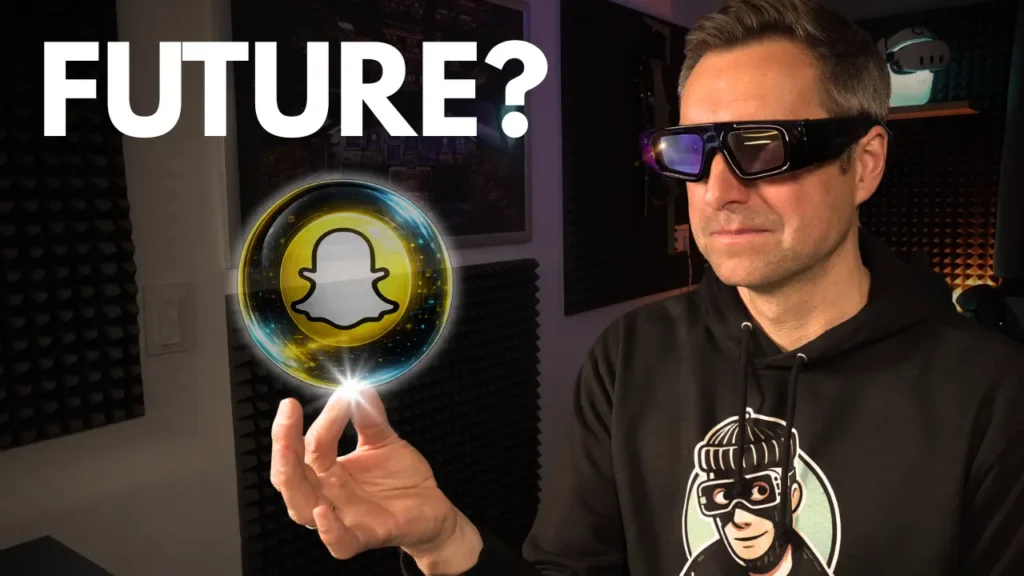
The Spectacles don’t feel like a finished product yet — and that’s exactly what makes them interesting
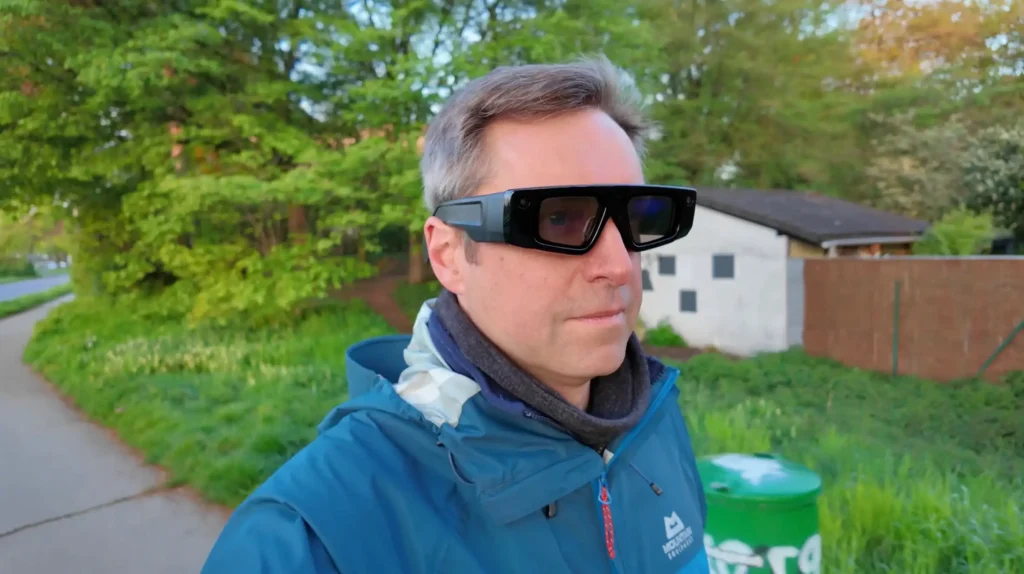
The first impression when putting them on is relatively clear: these glasses are technically impressive, but still far away from being a traditional everyday wearable. The Spectacles are still bulky, visually striking, and significantly more “techy” than something like the Ray-Ban Meta Smart Glasses. And honestly, that is not surprising once you look at what is packed into them.
Snap integrates two displays with dedicated processors, 6DOF tracking, multiple sensors and color cameras, audio, Wi-Fi, Bluetooth, GPS, and AI integration into this device. In many ways, it already contains a lot of the things people would want from future AR glasses — just not yet in a form factor you would comfortably wear all day long.
Even so, I was genuinely impressed at times while testing them.
The displays are pleasantly bright, and the spatial tracking works surprisingly well. Virtual objects remain firmly anchored in space and create this feeling that digital content can actually become part of the surrounding environment. That stability is extremely important, because augmented reality immediately falls apart once objects start drifting or appear unstable in the room.
And with the Spectacles, this already works remarkably well.
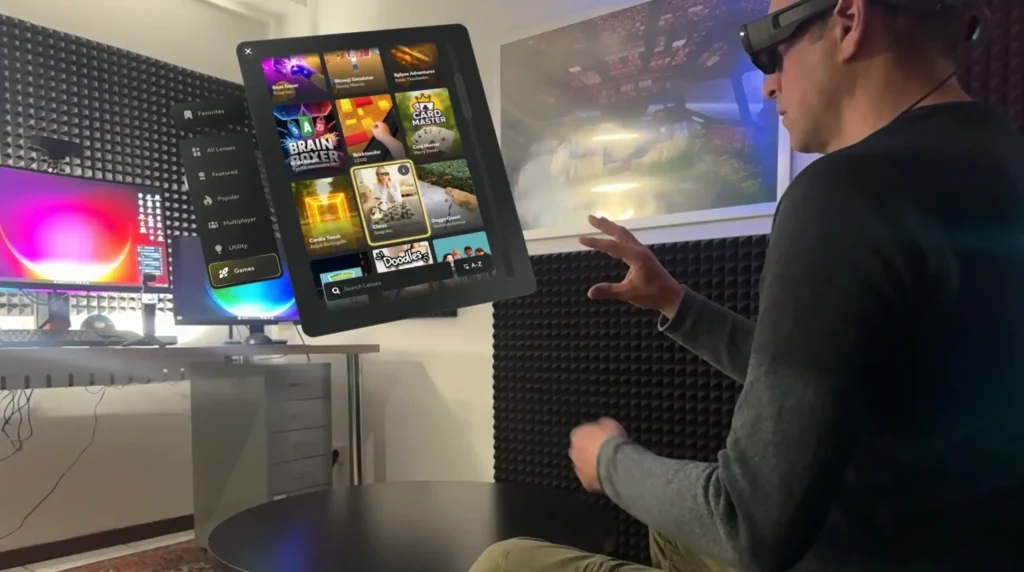
AR without controllers suddenly feels surprisingly natural
What I found particularly interesting was the interaction model. The glasses are primarily controlled through hand tracking and body movement. You are no longer constantly reaching for traditional VR controllers, but instead interacting directly with your hands and your environment. And that alone creates a much more natural feeling when using the applications.
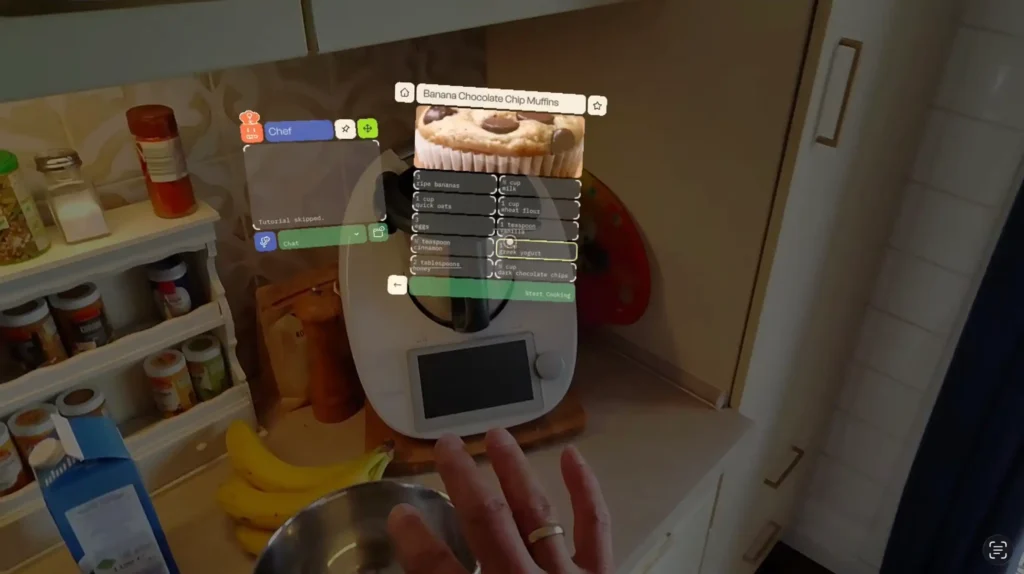
Things become even more interesting once real-world objects start interacting with the software. And this is where you suddenly realize that the technology could go far beyond pure entertainment. Of course, games and small AR experiences are possible. Skill-based games, puzzles, or interactive learning applications already work surprisingly well today. But at the same time, this also opens up possibilities for training, education, or even medical applications.
Particularly in rehabilitation or movement training scenarios, visual feedback can become incredibly motivating. Movements become immediately visible, progress is rewarded directly, and exercises become much easier to understand and engage with. Then there are things like live translations, collaborative workspaces, or interactive ways of sharing knowledge.
The actual “Spatial Computing” moment
For me personally, the most fascinating feature of the Spectacles is something else entirely.
Multiple glasses can share positional data with each other. That may sound technical and abstract at first, but in practice it feels surprisingly futuristic. Several people wear the same glasses and simultaneously see the same digital content positioned in the same physical space. They can work on objects together, interact with one another, and share the same digital layer over the real world. At that point, it no longer feels like traditional augmented reality. It feels more like a shared digital reality seamlessly blending into the physical environment.
It is difficult to properly explain this feeling if you have never experienced it yourself. But moments like these make it very clear why the term “Spatial Computing” is suddenly appearing everywhere.
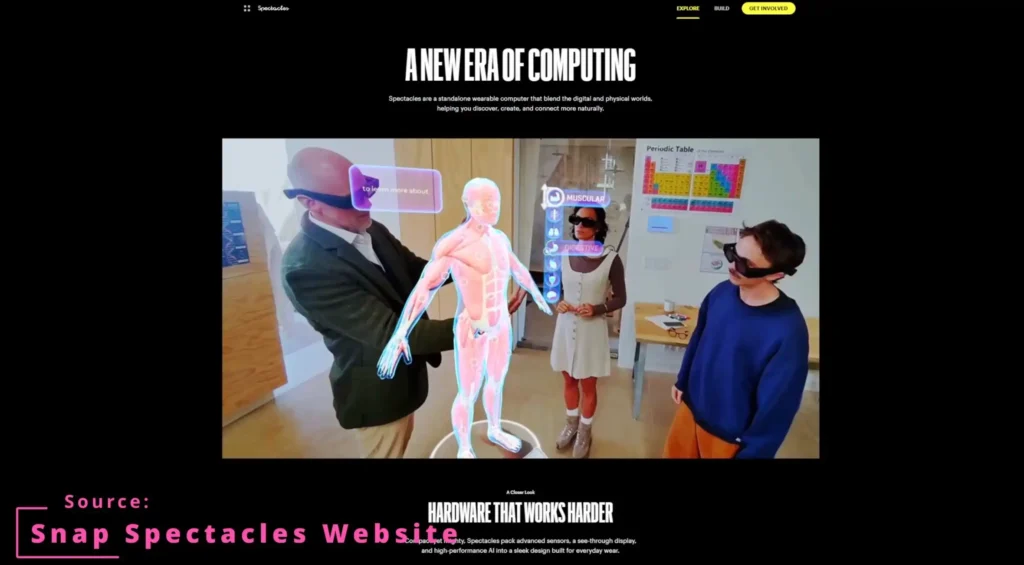
Spatial Computing and Collaborative Work in AR
A lot is still not good enough yet
At the same time, you can constantly tell that the Spectacles are still a developer device. The battery only lasts around 15 minutes under heavy use and practically begs for an external power bank. The field of view is still too small for my taste, especially in applications that rely more heavily on peripheral vision. The hand tracking can sometimes feel a bit sluggish, and the usable tracking area could definitely be larger. These are not minor details — they are real limitations. And that is exactly why I would not currently recommend the Spectacles as a consumer product. But at the same time, you can already see the underlying concept behind the idea very clearly.
Snap is pursuing a different strategy than many competitors
Right now, Snap is not even trying to build the perfect consumer product first. The Spectacles cannot currently be purchased regularly. Instead, developers and interested users have to apply for a rental program. The device is intentionally not aimed at the traditional consumer market yet. And that may actually be the core strategy behind all of this.
While many companies are primarily trying to sell hardware as quickly as possible, Snap Inc. is focusing heavily on the ecosystem behind it. Snap is investing not only in the hardware itself, but also massively into developer tools, platforms, and software infrastructure. With Lens Studio, there is already a system in place that allows developers to create their own applications for the Spectacles relatively easily. And ultimately, that means this: if Snap eventually releases a polished consumer-ready product, there could already be an existing library of apps and experiences waiting for it.
And that is an extremely important distinction. Many platforms do not fail because of the hardware — they fail because there is not enough meaningful content. Snap is very obviously trying to solve that problem ahead of time.
Right now, three different categories of smart glasses seem to be emerging
Looking at the current market, it almost feels as if three different directions are developing in parallel.
The first category consists of classic “always-on smart glasses” — glasses designed to work as unobtrusively as possible in everyday life. The Ray-Ban Meta Smart Glasses are probably the best-known example of this category right now. The focus here is primarily on communication, AI assistance, and everyday usability.
Then there are devices like the Spectacles. Glasses that are not worn permanently, but intentionally used for specific experiences. For AR applications, experiments, games, or productivity use cases. A kind of dedicated use-case AR device.
And finally, there are pure entertainment-focused products like XREAL or Rokid. Systems that mainly function as portable displays for gaming or video playback.
At the moment, nobody really seems to know which combination will ultimately succeed in the long term.

Maybe we are watching the smartphone story repeat itself
Looking back, this entire development feels strangely familiar. Before smartphones existed, there were many different standalone device categories: cameras, MP3 players, navigation systems, and traditional mobile phones. Today, all of those functions live inside a single device.
Something similar may currently be happening with smart glasses and AR glasses. Right now, manufacturers still need to build specialized hardware because the technology is not advanced enough yet to combine everything convincingly into one product. But in the long run, these categories could gradually merge together.
Conclusion
The Snap Spectacles are not a finished mass-market product yet. But they offer a genuinely interesting glimpse into where this entire category of devices could be heading. More importantly, they show that augmented reality is slowly starting to evolve from a technical demo into something that could actually become meaningfully useful — even outside traditional tech demos or gaming scenarios.
A lot is still too bulky, too heavy, too short-lived, or simply not technically refined enough yet. But at the same time, the Spectacles already make it very clear that there is a real concept behind all of this. Maybe we are genuinely standing at the beginning of a completely new category of devices.