
The Idea Behind NeuroRunner
VR enthusiasts have been dreaming about natural locomotion in virtual worlds for years. The problem is that dedicated VR treadmills are usually expensive, require a lot of space, and remain a niche product for enthusiasts and businesses.
This is exactly where NeuroRunner (The name has since been changed to VR StrideS.) comes in. The project takes an unusual approach: instead of relying on specialized hardware, it uses the VR controllers and the user’s body movements to simulate locomotion. The developer describes it as a “Poor Man’s VR Treadmill” — a solution aimed at bringing more physical movement into VR without the cost and complexity of dedicated hardware.
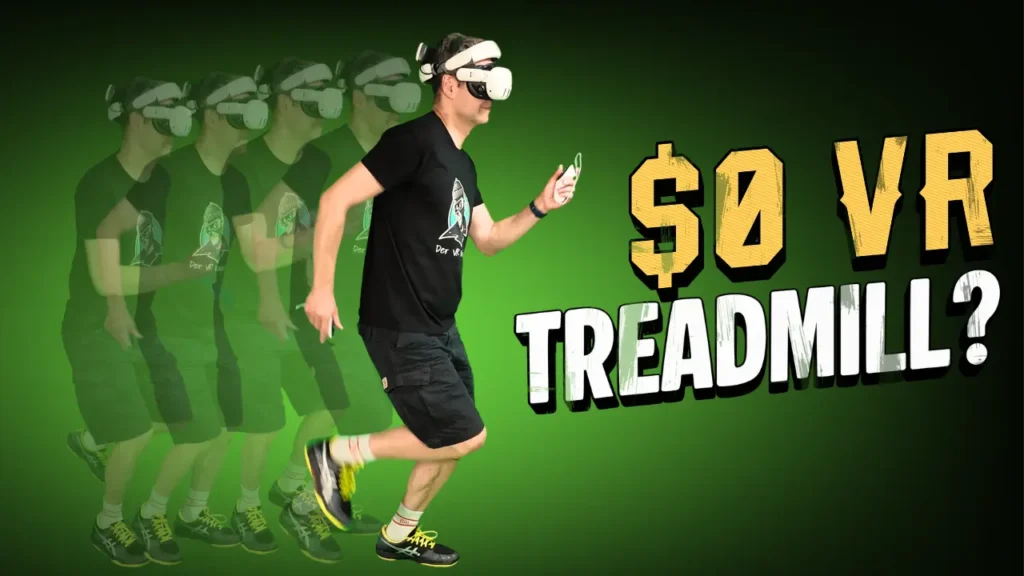
My First Test Didn’t Go as Expected
When I first tried NeuroRunner, I was skeptical. My initial experience was mixed, and I felt the system wasn’t responding consistently to my movements.
Looking back, however, I realized that part of the problem was how I was using it. After reading through the project’s Reddit discussions, it became clear that I had misunderstood the intended movement pattern. I assumed that the system would work best with a natural walking motion and freely swinging arms, similar to real-world walking. In its current form, NeuroRunner is not designed to be used that way.
How the System Currently Works
The key is finding the right rhythm. Movement direction is determined by the position of the hand or controller, while the arms are intended to stay relatively forward rather than swinging naturally at the sides. Instead of actual running or walking, a light stepping or bouncing motion tends to work much better.
Another important factor is the sensitivity setting. NeuroRunner includes a sensitivity slider that determines how strongly physical movement is translated into in-game speed. Even small adjustments can noticeably change how the system feels. The developer describes the process as “getting the rhythm”, and once that rhythm clicks, the movement starts to feel much more intuitive.
Contact With the Developer and What’s Next
Shortly after publishing my video, the developer reached out directly. The developer, who signs messages as gnuj, left a comment under the video and later contacted me via email. He confirmed that my video was likely the first YouTube video ever published about NeuroRunner and thanked me for pointing out that the Steam page could do a better job of explaining how the system is intended to be used.
More interestingly, gnuj provided access to a pre-release version for further testing. This version runs as a background application and is designed to work with SteamVR, Virtual Desktop, and actual VR games. At the same time, development is actively continuing. According to gnuj, the speed calculation has already been revised after discussions with someone who specializes in human locomotion and biomechanics.
Conclusion
My biggest takeaway from the first tests is simple: the concept works. NeuroRunner is not a replacement for a fully developed VR treadmill, but it already creates a more active and physically engaging experience than traditional thumbstick locomotion. At the same time, it is clearly still a work in progress and requires some adjustment from the user.
The most interesting question now is how well NeuroRunner performs outside its test environment. That’s exactly what I plan to explore next by trying the new version in several VR games. If those tests are successful, what initially seems like a quirky experiment could turn into a genuinely interesting alternative for VR locomotion.