
There’s a moment that many VR enthusiasts seem to experience at some point. You put on a new headset, launch a game — and instead of simply immersing yourself, your brain starts analyzing. You pay attention to tracking quality, render resolution, latency, sweet spots, compression, or distortion profiles. The actual experience itself almost starts fading into the background.
That’s exactly the question I’ve been asking myself lately: Have I lost the magic in VR? Or has it simply changed?
When VR Suddenly Becomes Analysis
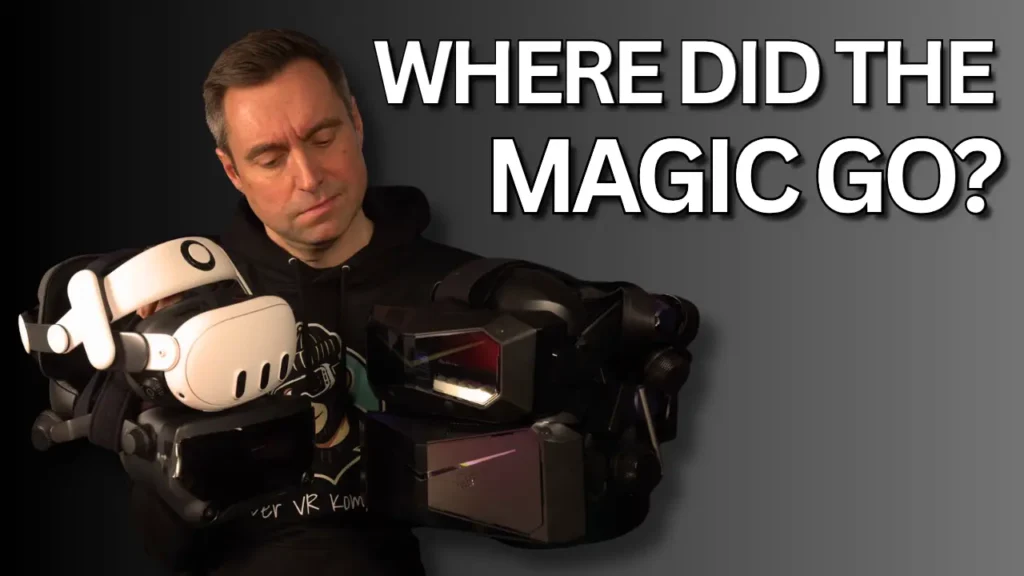
At this point, I have several of the most exciting VR headsets I’ve ever tried sitting here. Devices that probably would have completely blown my mind just a few years ago.
But now, something else is always running in the background. When I use the Valve Index, I no longer think only about how fun Beat Saber is. I think about how impressive Lighthouse tracking still is, even years later.
With the Pimax Crystal Super, I constantly analyze how resolution and framerate interact, how much performance certain settings cost, and what technical compromises exist behind the scenes.
And even with the Meta Quest 3, there’s always this ongoing awareness in the back of my mind about what hand tracking, compression, or upscaling are actually doing.
At some point, you realize: You’re no longer just playing games. You’re playing with the technology itself.
A Lot of People Probably Know This Feeling
Not everyone creates videos or tests hardware. But there are still many people in the VR community who gradually change in a similar way. Suddenly, you find yourself discussing render resolutions on Reddit, comparing tracking systems, analyzing panel technologies, or debating performance differences while other people are simply enjoying a game.
Maybe there are even different phases people go through. First comes pure excitement. That initial magic when VR feels completely new. Then comes optimization. And eventually, you end up deep in technical discussions, benchmarks, and detailed analysis. That probably sounds more melancholic than I actually mean it to. Because maybe this isn’t really a loss at all. Maybe it’s simply evolution.
A VR Flyer From 1993
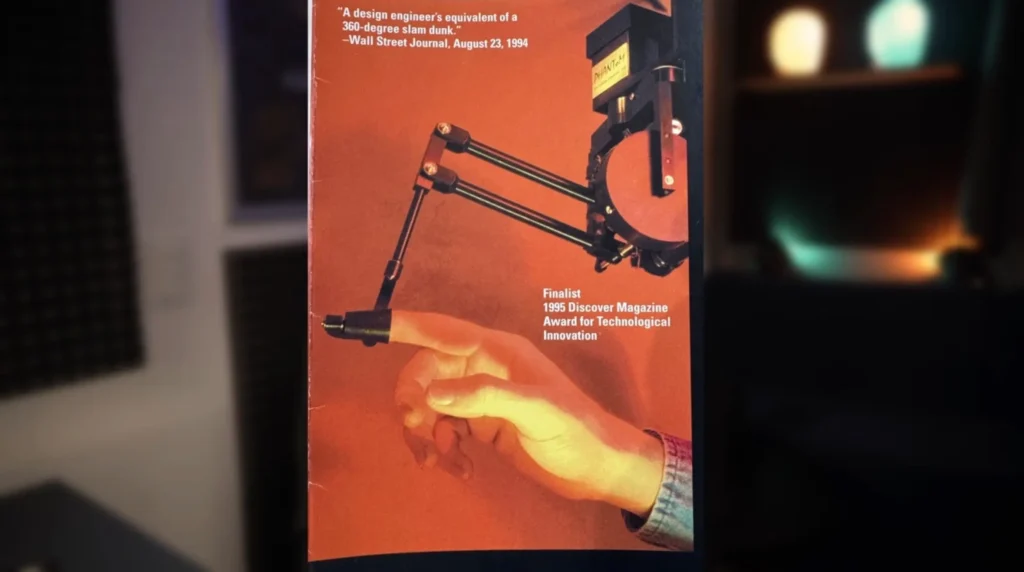
Recently, Roland visited me to try out the Crystal Super. He brought something with him that surprisingly stayed on my mind for quite a while afterward: an old VR flyer from 1993. Back then, people weren’t talking about pixels per degree, field of view, or lens designs. The focus was on teaching computers how to simulate touch. It was about force feedback, physical interaction, and entirely new ways of experiencing technology.
And even though the technology was obviously extremely limited from today’s perspective, the idea behind it still felt almost magical. Not because of graphics or impressive resolution, but because something suddenly seemed possible that previously felt completely impossible.
Maybe Everyone Experiences VR Differently
While Roland was here, we still ended up analyzing everything again. Tracking, panels, potential, technical decisions. At some point, I asked him whether he still feels that magic — or whether he also permanently operates in analysis mode by now. I found his answer interesting. He said those magical moments are still there for him. Especially when he’s simply wandering through a beautiful virtual world, when nature feels believable, when he fully arrives in the moment.
And that’s when something clicked for me: Maybe the magic doesn’t disappear completely. Maybe it just reveals itself differently for each person.
The Real Magic Happens Somewhere Else
At some point, I realized that the strongest VR moments rarely come from small technical improvements — not from five percent more sharpness or two extra degrees of field of view. The real magic usually happens when something feels fundamentally new again. When technology suddenly stops feeling like technology, and when you stop dissecting every little detail.
Does VR Need the Next Big Leap?
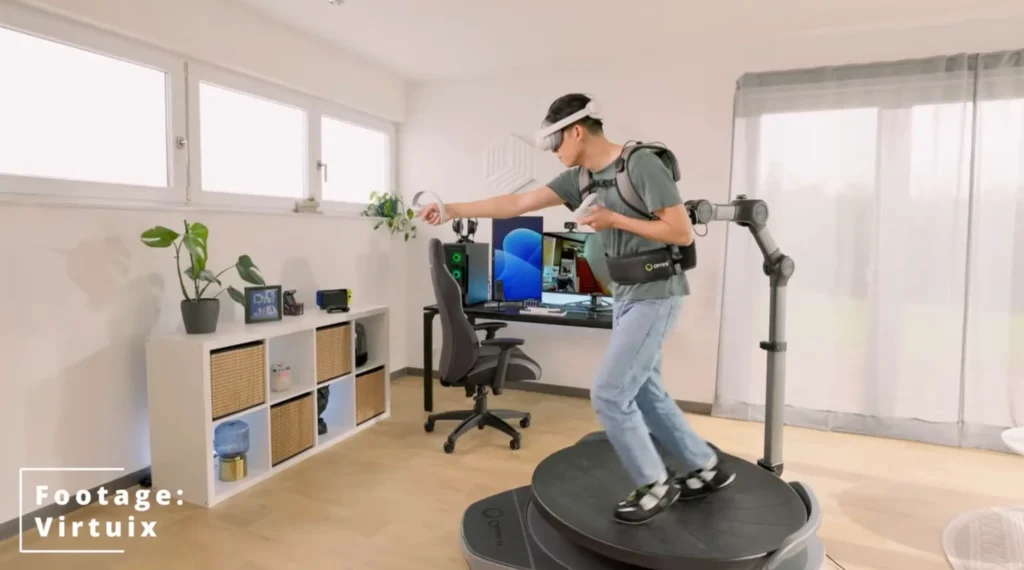
Maybe there’s no real way back to that original sense of wonder. Maybe VR simply needs another major leap forward — something that suddenly enables more natural movement, more believable physical feedback, or interactions that no longer feel like menus and input devices. Maybe then there will once again be moments where even the internal analysis mode briefly goes silent.
Maybe This Isn’t a Loss at All
I don’t think I can ever fully go back. Once you understand how tracking works, how rendering pipelines function, or why certain design decisions are made, you automatically notice those things. But I also don’t think that means the magic is gone. Maybe it’s simply waiting for the next real step forward — and until then, I just engage with VR differently.
I analyze, I compare, I understand the technology on a deeper level. And honestly, I enjoy that just as much right now. So maybe the real question isn’t actually: “Is there a way back?”
Maybe the better question is: “Where are we looking for the magic today?”