
Note: There is also a detailed video accompanying this article on my YouTube channel “VR Accomplice”. There, you can see many of the points mentioned here directly in action, including FOV measurements, glare testing, and practical impressions from different games.
Transparency note: Pimax provided me with the Pimax Crystal Super for this review. Some of the links in this article may be affiliate links. If you purchase through them, you support my work at no additional cost to you.
Overview and First Impressions
The Pimax Crystal Super is currently one of the most ambitious PCVR headsets on the market. Even on paper, it quickly becomes clear where this is heading: maximum image quality, high resolution, a large field of view, and a modular concept unlike almost anything we have seen before.
At the same time, this headset is clearly aimed at enthusiasts. If you simply want an easy and uncomplicated VR experience, you will probably end up with a Meta Quest instead. The Crystal Super, on the other hand, targets users who are willing to put in more effort in exchange for an exceptionally sharp and immersive image.
The Modular Concept of the Crystal Super
One of the most exciting ideas behind the Crystal Super is its interchangeable optical unit. Pimax is pursuing an approach that has barely been seen in this form before.
More specifically, the display and lens unit can be swapped out. This creates different versions of the headset with different priorities.
Currently or potentially, this includes:
- 50PPD QLED
- 57PPD QLED
- Ultrawide Module
- Micro-OLED Module
Here I am testing the 50PPD version, which will probably be the most balanced middle ground for many users. It combines an extremely high resolution with a large field of view and very good brightness.
Looking for the Pimax Crystal Super?
Visit my Pimax Buying Guide for an overview of all current Pimax headsets, optical engines, recommended accessories, and the latest product links.
I fundamentally find the idea behind this quite exciting. Instead of having to buy a completely new headset every time, you can theoretically swap out individual modules and shift the focus — for example toward more field of view, higher pixel density, or eventually OLED technology.
Technical Specifications and Requirements
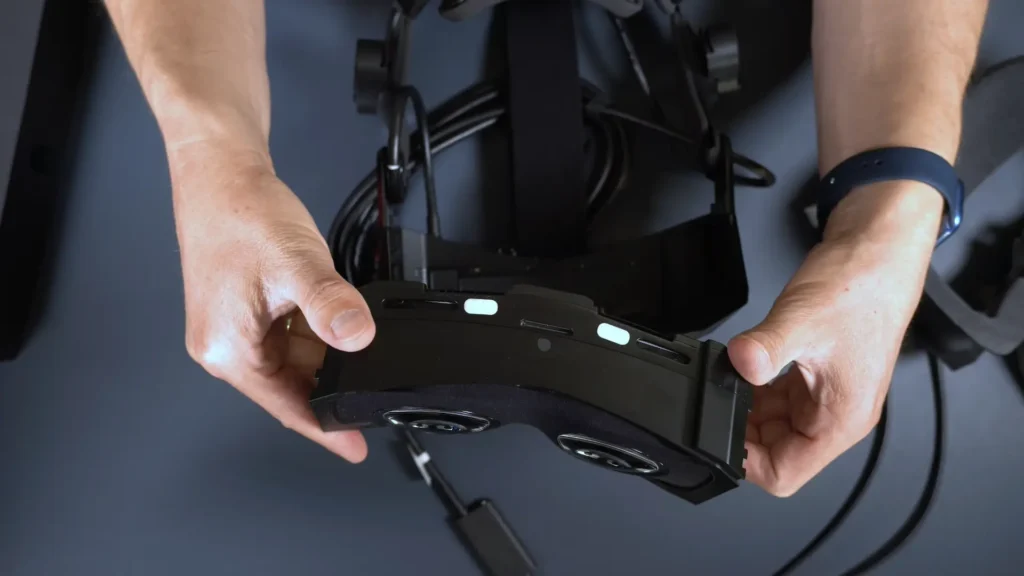
The Crystal Super is a classic PCVR headset. That means you need a powerful gaming PC and connect the headset to your computer via cable. The included cable is about 4.5 meters long.
Why so much performance is required becomes immediately obvious when looking at the specs.
The 50PPD version uses QLED displays with MiniLED backlighting and a resolution of 3840 × 3840 pixels per eye. This creates an exceptionally sharp image. At the same time, the MiniLED technology enables very good local dimming, making dark scenes appear noticeably more contrast-rich than with traditional LCD solutions.
Pimax refers to this as “Local Dimming 2.0” with high-resolution dimming zones. Especially in dark scenes, you can genuinely notice that black levels and contrast visibly benefit from this.
The headset also uses aspherical glass lenses. These not only provide very high image sharpness but also create a large sweet spot.
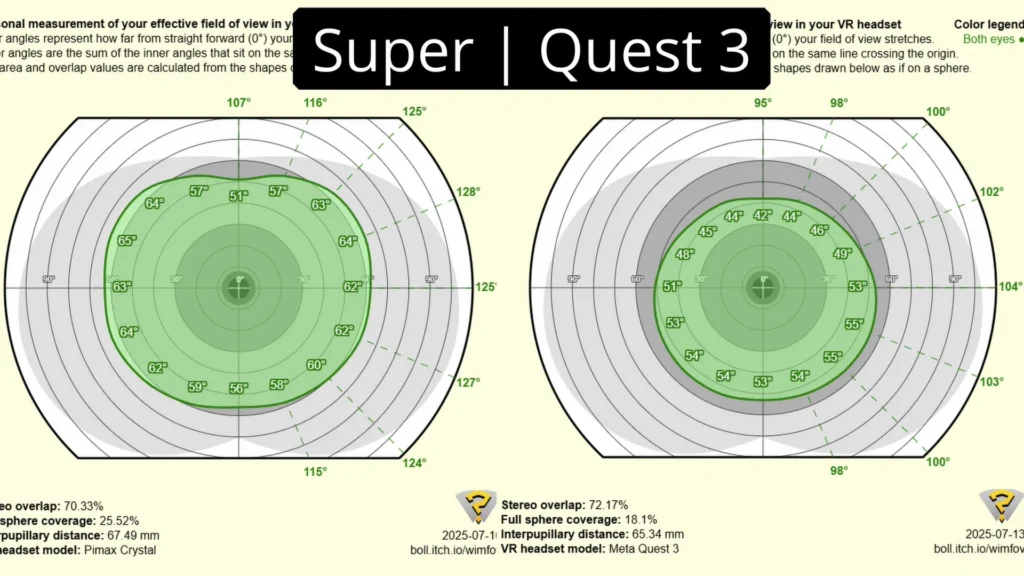
The headset supports 72 Hz and 90 Hz refresh rates and, according to Pimax, offers up to 127 degrees of horizontal field of view. In my own testing, I measured around 125 degrees horizontally, which is a very strong result in my opinion.
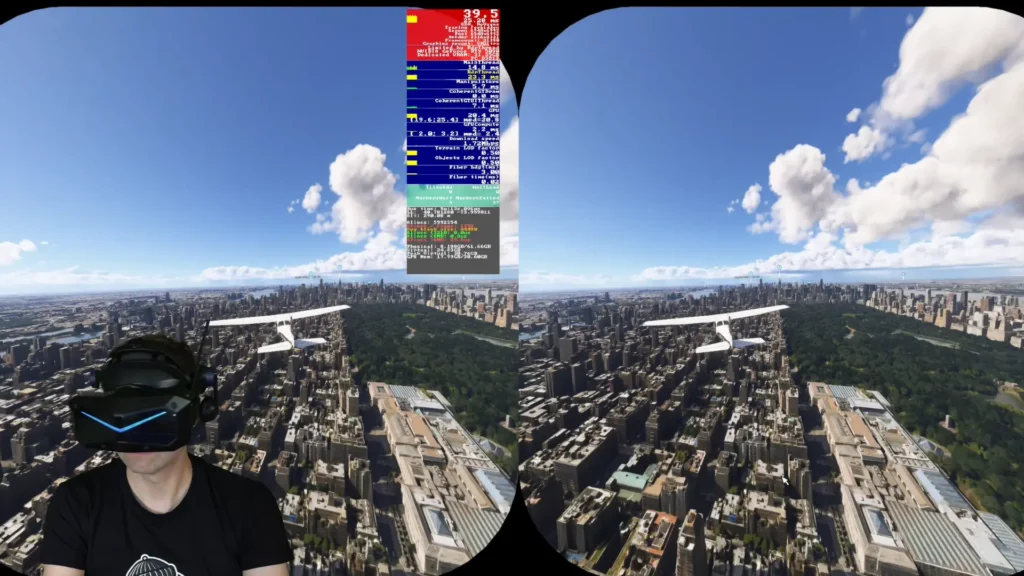
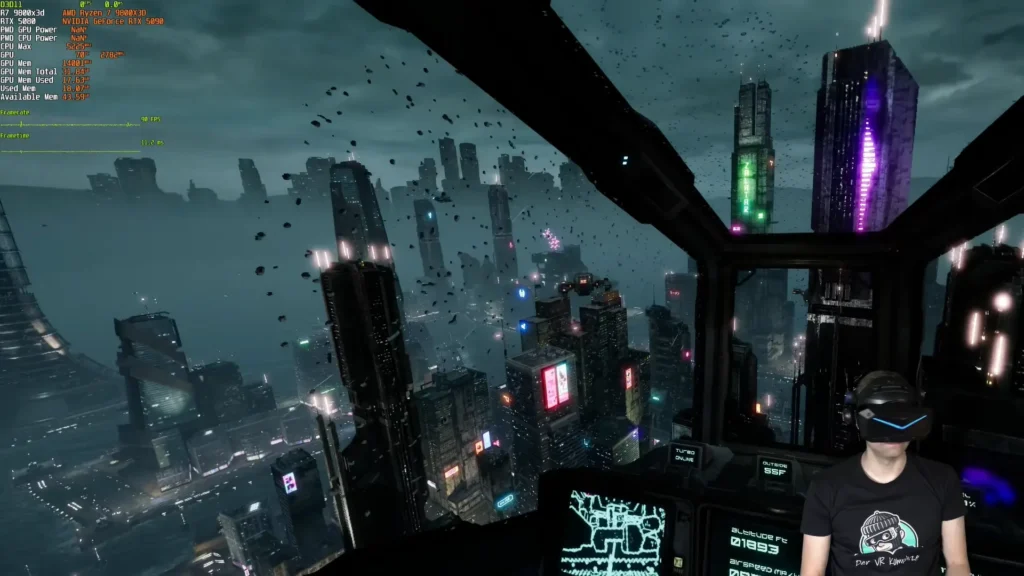
Additionally, the Crystal Super includes eye tracking. This enables Dynamic Foveated Rendering — a technique where only the area you are directly looking at is rendered at maximum sharpness. Especially in demanding games like Microsoft Flight Simulator, this can make a real difference.
Another advantage of the eye tracking is the automatic IPD adjustment. The headset detects your pupil position and automatically adjusts the lens position accordingly.
Weight and Comfort
When it comes to comfort, Pimax unfortunately stays somewhat true to its usual pattern. The Crystal Super is not a lightweight headset.
Because of the permanently attached cable, the exact weight is difficult to measure precisely, but overall the headset comes in at around 960 grams. Additional components such as DMAS headphones or other accessories add a bit more.
That sounds heavy — and of course, you can feel it.
However, perceived comfort depends heavily on how the weight is distributed. Pimax provided me with an alternative top strap that leans more toward a halo-style design and distributes more weight onto the forehead. I generally found this more comfortable than the standard solution.
That said, this halo top strap is not perfect either. The build quality does not feel particularly premium, and the design partially conflicts with the facial interface.
Personally, I would rather recommend the comfort top strap from the Pimax store. Overall, it feels more refined, flexible, and higher quality.
In general, the same applies to the Crystal Super as with previous Crystal headsets: if you want to maximize comfort, you should look into additional accessories. Studioform Creative in particular offers very good solutions with additional padding and counterweights.
Glasses wearers can generally fit into the headset as well, but I would still recommend getting prescription lenses instead.
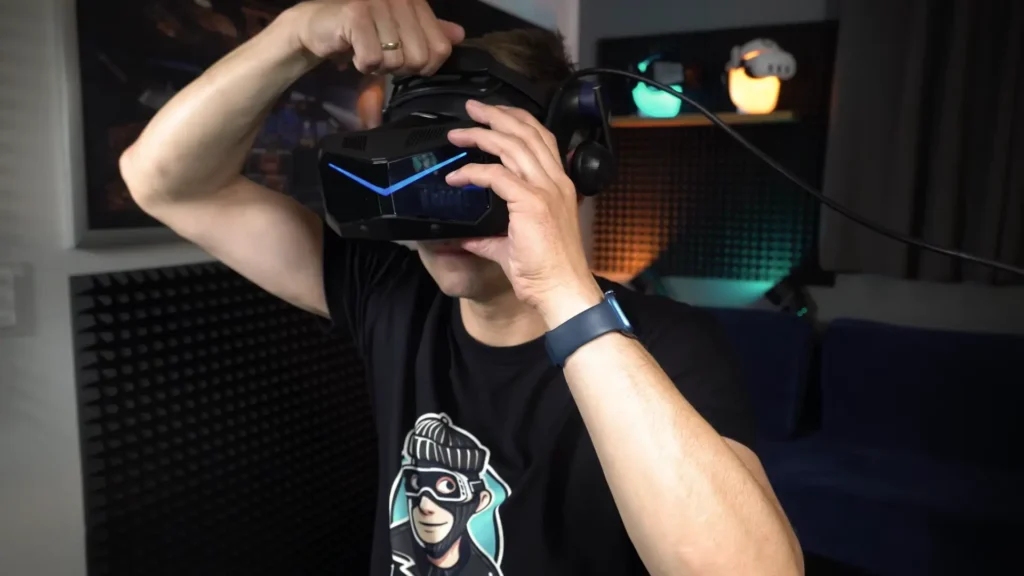
Image Quality: The Crystal Super’s Greatest Strength
For me, image quality is very clearly the greatest strength of this headset.
The combination of high resolution, a large sweet spot, and a strong field of view creates an image that looks visibly sharper than the Crystal Light or even the original Crystal.
Fine details especially benefit enormously from this. Cockpit displays, small text, and distant objects appear significantly clearer.
On top of that, the displays offer very high brightness. The image looks vivid and powerful without becoming uncomfortable.
The glass lenses also create a large clear viewing area. You have to “center” your eyes much less compared to many other headsets.
Chromatic aberrations are slightly visible near the edges, but overall they remain fairly limited for me.
The Crystal Super with the 50PPD module also performs quite well regarding glare, at least in my experience.
One topic I do have to mention, however, is mura. At the time of my first recordings, I honestly did not yet have a particularly trained eye for it. By now, I can confirm that mura is present. Personally, though, I mainly notice it in extreme situations, and it is not a dealbreaker for me. In the end, this also remains a very subjective perception.
Eye Tracking and Foveated Rendering
The eye tracking worked really well in my testing.
Dynamic Foveated Rendering in particular can make a noticeable difference in supported games — both for image quality and performance.
Especially in Microsoft Flight Simulator, you quickly realize how important this kind of technology becomes at such a high resolution. Without technologies like this, even extremely powerful hardware would quickly hit its limits.
Audio and Microphone
The integrated microphones are absolutely sufficient for normal online gaming. They work perfectly fine for voice chat and multiplayer communication. For professional recordings or content production, however, I would not use them.
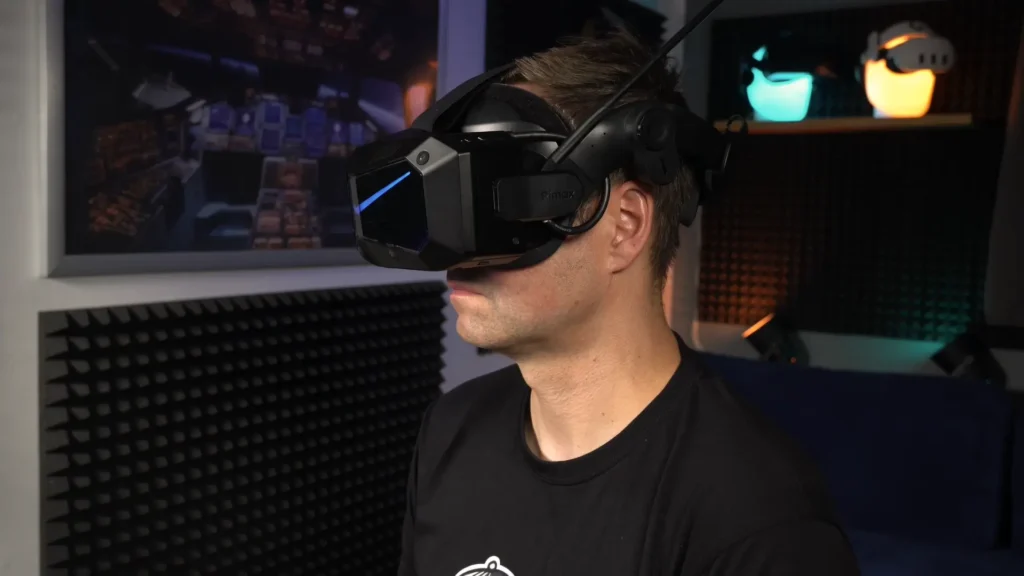
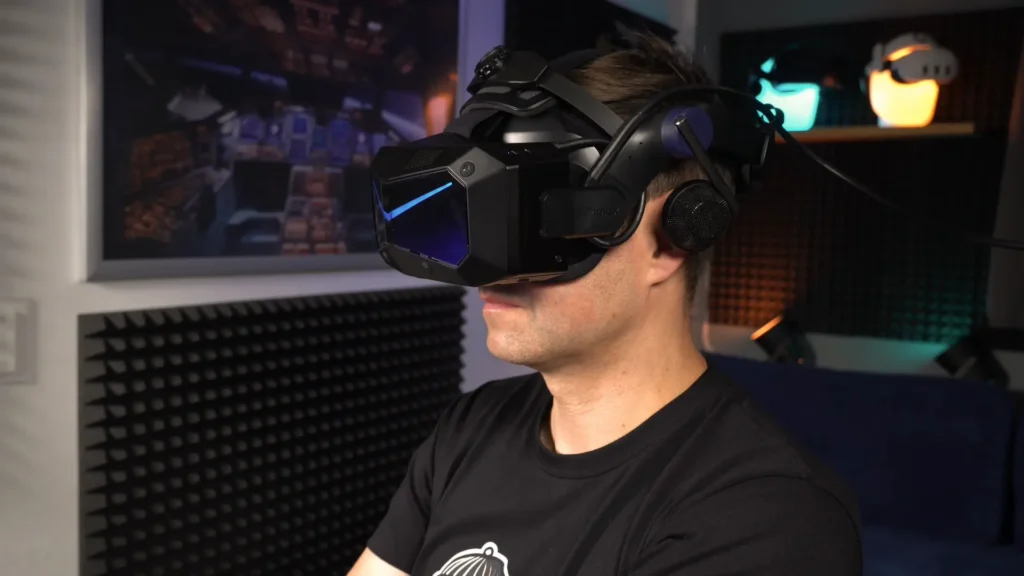
The headphones, on the other hand, show a very noticeable difference between the variants. The included SMAS headphones sound relatively thin and tinny. The optional DMAS headphones are clearly superior. More bass, more dynamics, and overall a much more pleasant sound.
If you decide to get a Crystal Super, I would personally definitely plan on getting the DMAS headphones as well.
Controllers and Tracking
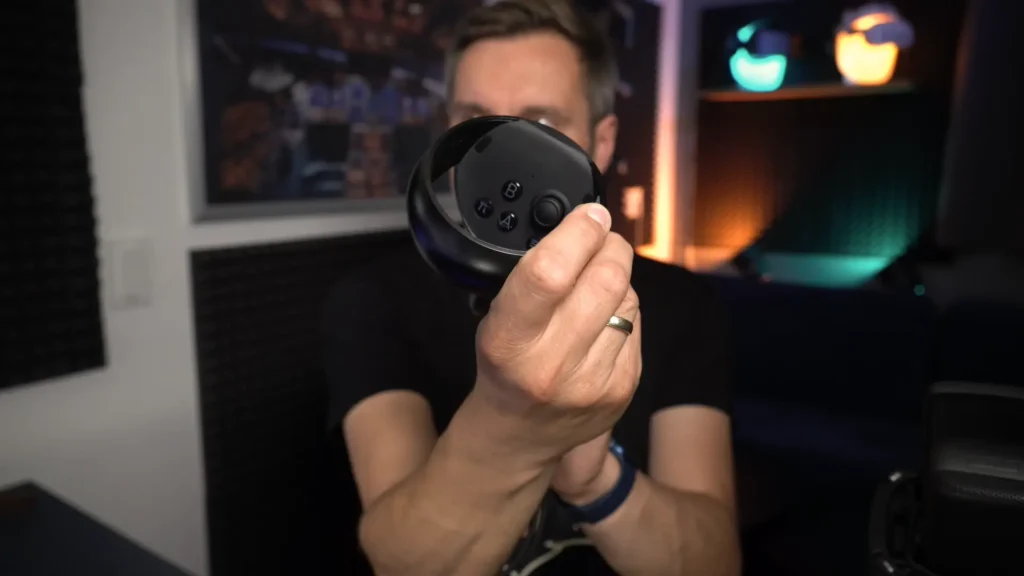
The controllers are essentially still based on the first Crystal generation and feel somewhat outdated by now. The ring design especially feels more reminiscent of older VR controller generations, while many other manufacturers have already moved toward more compact ringless designs. The build quality could also be better. At least my controllers worked reliably over a longer period of time and therefore passed the long-term test.
One positive aspect is that they can be charged via USB-C and do not require replaceable batteries.
The inside-out tracking of the Crystal Super is generally usable, but for me it still does not reach the level of a Meta Quest 3. For simulation games, this is usually not a major issue because primarily the headset itself needs reliable tracking. For casual games, the tracking is also sufficiently good in my opinion.
However, anyone playing competitively — especially fast shooters — should rather look toward the upcoming Lighthouse faceplate.
Pimax Play and Software
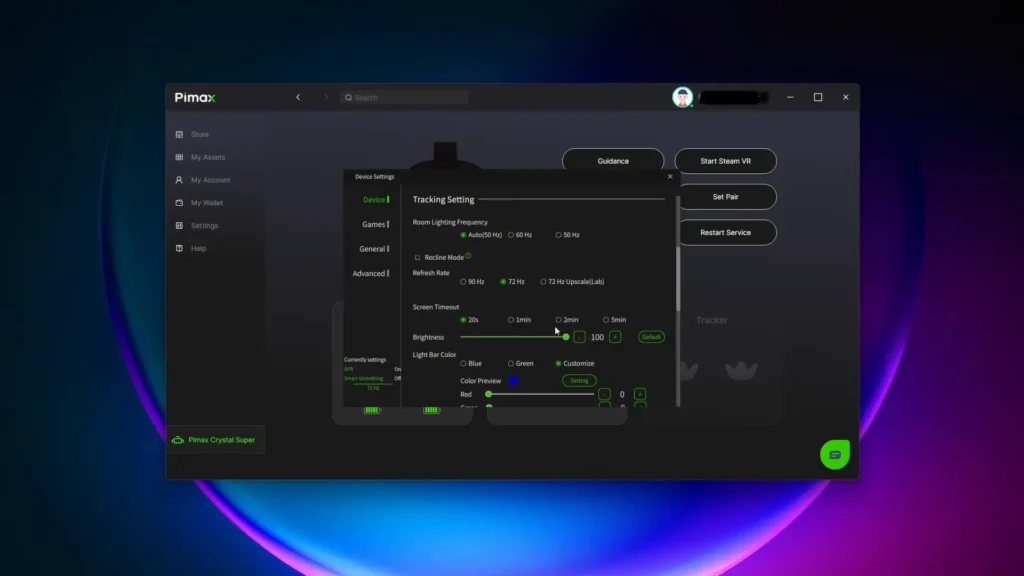
Pimax Play offers many adjustment options and allows you to customize the headset quite extensively without becoming completely overwhelming. Multi-window functionality also works fairly well overall. In theory, you could even use the Crystal Super productively for work. Personally, however, that would not be a realistic long-term use case for me. The headset is simply too heavy and bulky over longer periods.
One issue that still bothers me is the software weakness regarding room setup. The tracking area is sometimes not stored reliably, meaning you have to set it up again. That feels unnecessarily unfinished.
Final Verdict
For me, the Pimax Crystal Super with the 50PPD module is an impressive high-end PCVR headset with exceptionally strong image quality.
Especially the combination of high resolution, large field of view, very good sharpness, and functioning eye tracking makes this headset extremely interesting for simulation enthusiasts.
At the same time, Pimax still carries over some of its well-known weaknesses. The headset is heavy, comfort often requires additional optimization, and the inside-out tracking still lags behind the best solutions on the market.
On top of that, there are smaller software issues that really should have been solved cleanly by now.
Even so, the Crystal Super is currently clearly one of the most exciting PCVR headsets for me — especially for users who are looking for maximum image quality and are willing to spend a bit more time optimizing their setup.
If you are already looking for more information on how to optimize the Pimax Crystal Super to get the absolute most out of the headset, you should definitely read this complete guide on the topic.
Affiliate note: Some of the links mentioned may be affiliate links. If you purchase through them, you support my channel and my work on further independent XR content at no additional cost to you.
Interested in the Pimax Crystal Super?
You´ll find all current Pimax headsets, optical engines, recommended accessories , and the latest product links in my Pimax Buying Guide.