
Can They Bring Back the Magic of VR?
Recently, I made a video about how the magic of VR has gradually changed for me over the years. Not because VR has become worse — quite the opposite. The technology keeps evolving. Higher resolutions, better lenses, larger fields of view and more powerful headsets make modern VR objectively better than it was just a few years ago.
And yet, there are moments when VR no longer feels quite as overwhelming as it did in the beginning. A feeling that many people who have spent years with virtual reality will probably recognize. Our brains eventually adapt to almost anything — even things that initially felt completely unbelievable.
But while thinking about this topic, I noticed something: The most immersive VR experiences I’ve ever had or seen often had surprisingly little to do with pure image quality. It wasn’t necessarily the highest resolution or the sharpest display that impressed me the most. It was the moments when VR suddenly became more than just a screen in front of my eyes. Moments where not only my eyes, but my entire body became part of the experience.
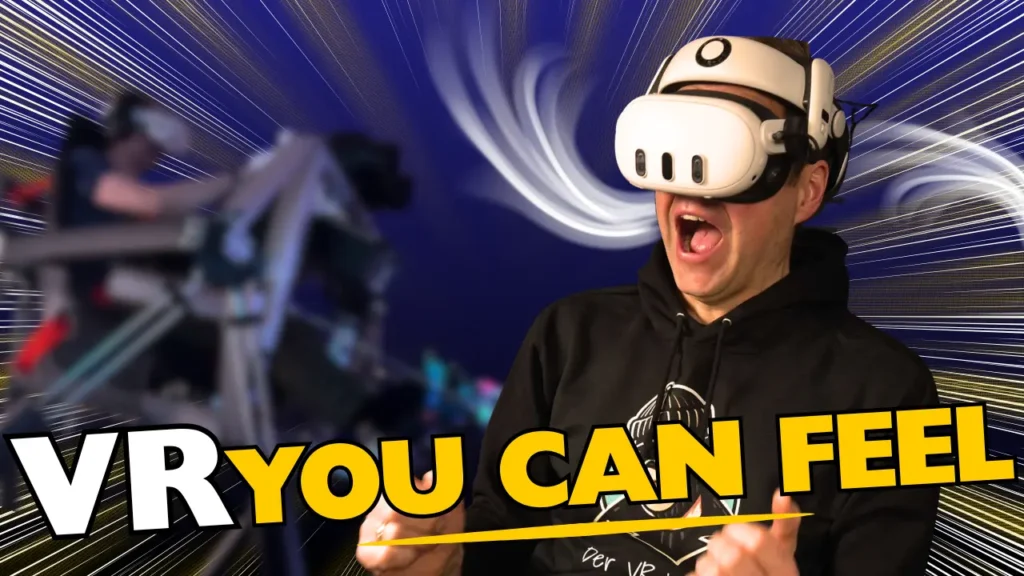
When VR Becomes More Than Just a Screen in Front of Your Eyes
Technically speaking, in VR we are really just looking at two small displays directly in front of our eyes. And yet, our brain creates an entire spatial world out of it. We perceive depth, distance and presence.
But reality is obviously much more than that. We feel the ground beneath our feet. Acceleration in a car. Wind on our face. Forces acting on our body. And many of these things can now be simulated in VR as well. Motion, haptics, wind and physical feedback can suddenly make the illusion of a virtual world feel far more believable.
Motion Rigs: When a Flight Simulator Suddenly Feels Real
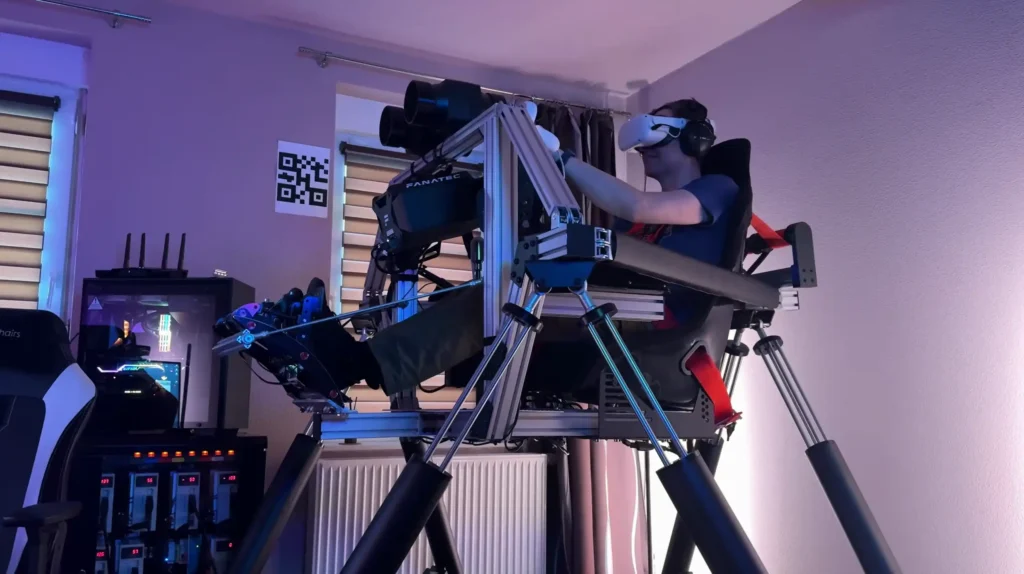
One of the most intense VR experiences I’ve had so far was a 6DoF motion rig that a friend built himself. It could be used for different simulations: racing games, truck simulators or fighter jets in DCS World. And especially the flight simulator genuinely surprised me back then. Not because of the headset’s resolution, but because so many small elements suddenly came together.
The motion rig moved the entire body. The seat reacted to flight maneuvers. On top of that, there was a realistic force-feedback joystick, a throttle and a harness system. At some point, my brain genuinely started to feel as if I was sitting inside a real cockpit. Racing simulations worked in a very similar way. Cornering forces, acceleration, braking movements and force feedback in the steering wheel make you experience motion physically instead of only seeing it visually. And that changes immersion dramatically.
Sandbox VR and Free-Walk Experiences
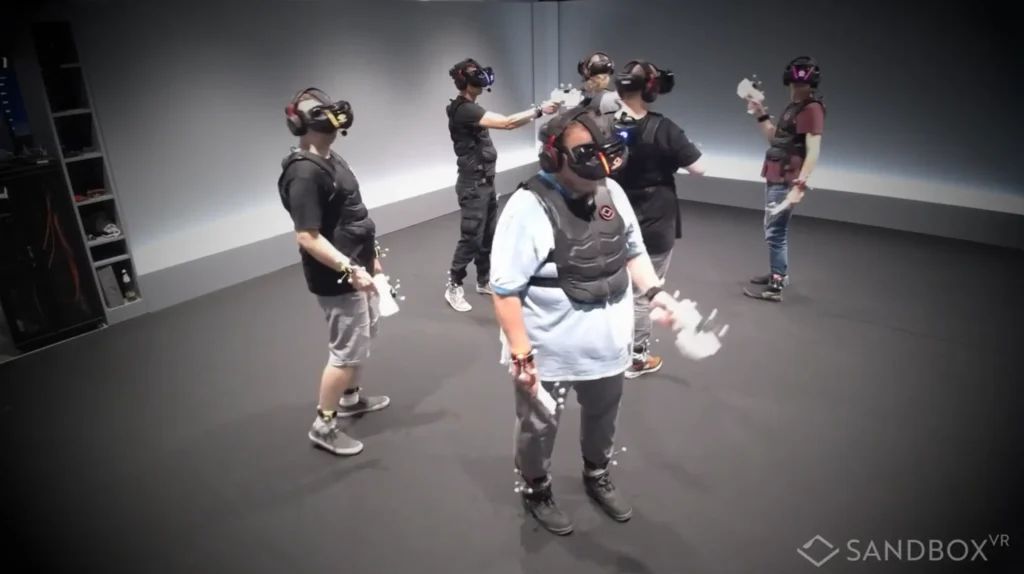
I experienced a completely different kind of immersion in so-called free-walk VR experiences. One example is Sandbox VR.
There, you do not simply move through a virtual world with a controller. You physically walk through a real space. At the same time, you wear a VR headset, haptic vests and hold real objects in your hands that are represented as weapons or tools inside the game. The result is a very unusual sense of presence. You react to other players. You move naturally through the environment. You physically feel hits or explosions on your body. Some installations even use wind effects to make certain situations feel even more convincing. The technical effort behind experiences like this is enormous. But that is also exactly why they often feel far more intense than traditional VR games at home.
VR Treadmills and the Idea of Real Walking in VR
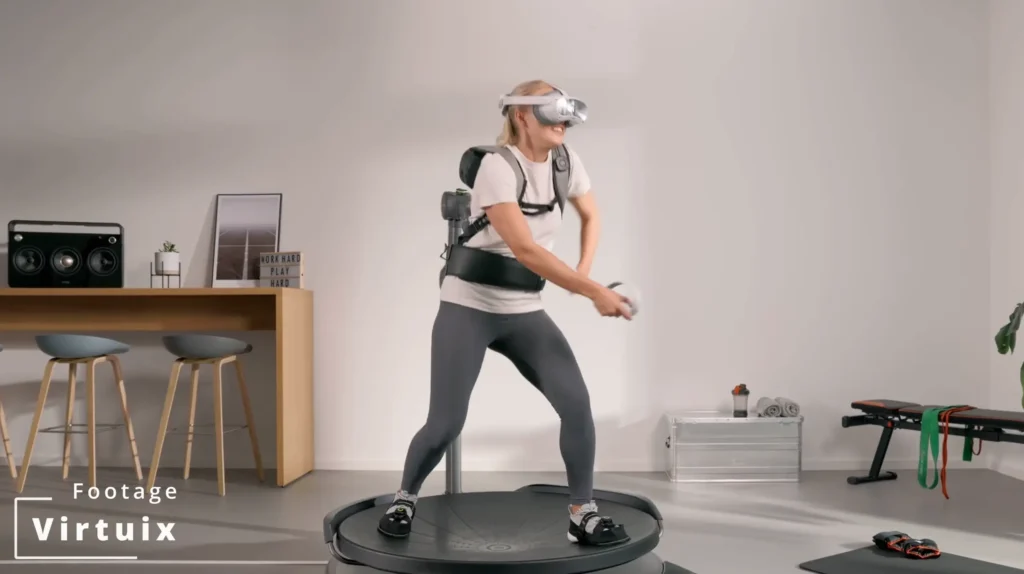
Another fascinating area is VR treadmills. Many people probably know this concept from Ready Player One: platforms that allow you to walk, run or crouch while those movements are transferred directly into the virtual world. A well-known example is the Virtuix Omni One. The idea behind it is fascinating: you move physically while still remaining in the same place in the real world. This creates the feeling of actually moving through a virtual environment. The technology certainly still has limitations and challenges today. But it also shows very clearly where VR could eventually be heading in the long term.
Wingsuit VR and Birdly
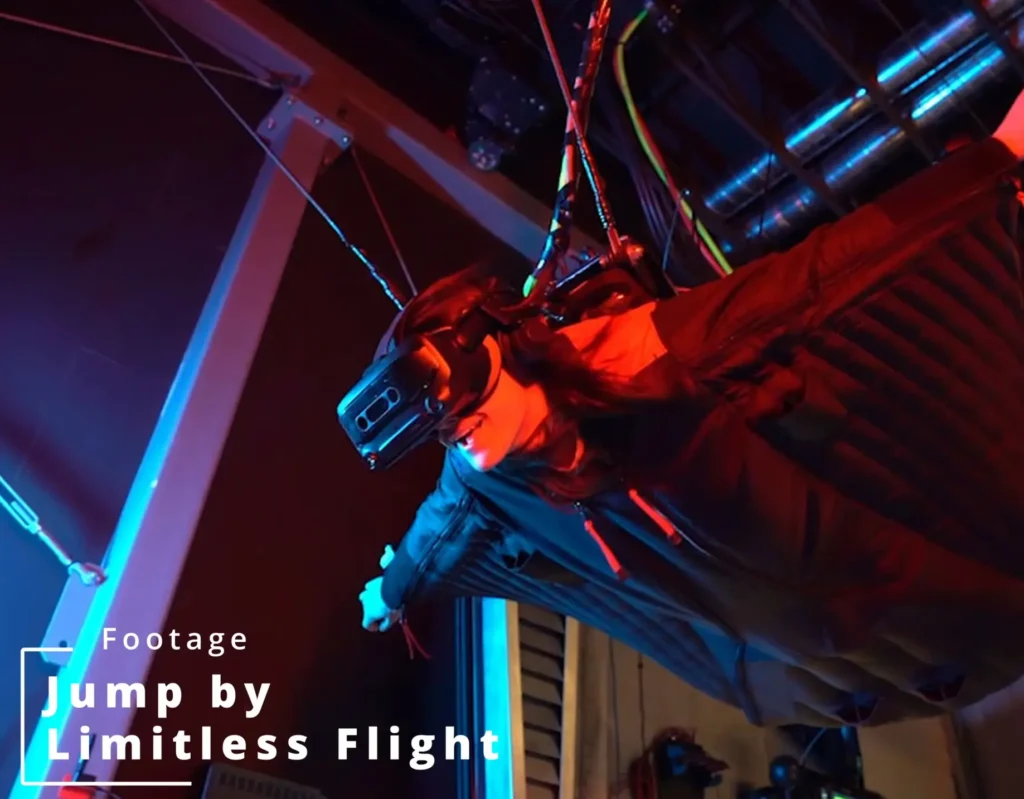
I also find VR flying experiences particularly exciting. Some wingsuit installations actually suspend you in a flying position with cables. You feel wind on your face and control your direction through body movement alone. Even the idea of that already sounds incredibly immersive.
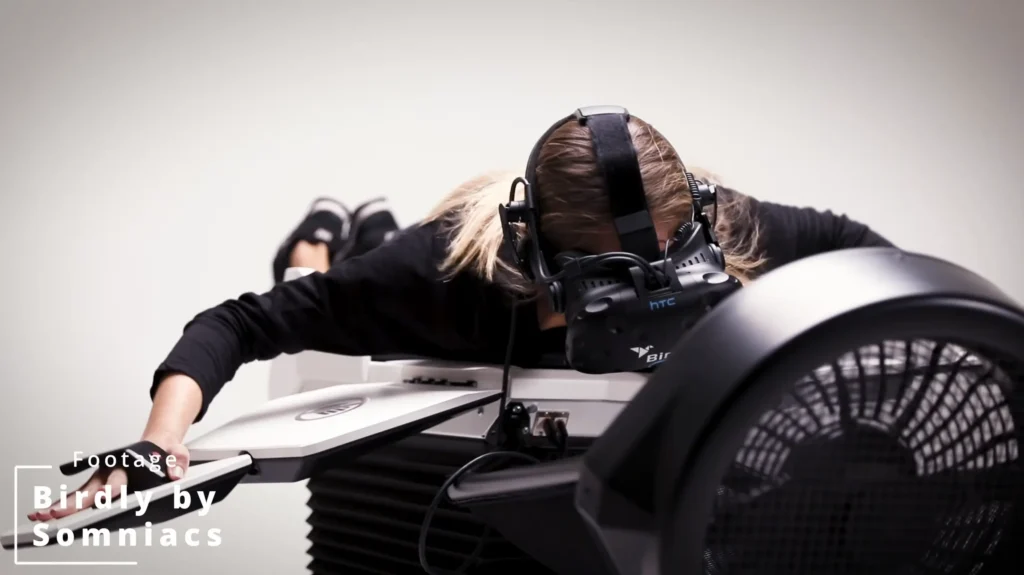
An even more extreme example is Birdly by Somniacs. You lie in a special flying position and control movement with your own arms, which essentially become virtual wings. At the same time, the system generates wind and physical movement to simulate the sensation of real flight. I have not personally tried Birdly yet. But concepts like this demonstrate extremely well how powerful immersion can become once VR starts involving the entire body.
Recently, however, I had the chance to test ICAROS, a system that had me flying through the Alps. ICAROS combines VR gaming with rehabilitation training and fitness.
The Real Strength of VR
When you look at all of these technologies, a clear pattern eventually starts to appear. The strongest VR experiences often are not created by better graphics alone. They happen when virtual experiences become physical. When you truly move. When you feel forces acting on your body. When wind is simulated. When the virtual world is no longer just visible, but physically believable.
Maybe that is where the next major evolution of VR really lies. Not only in sharper displays or even higher resolutions — but in involving more of our senses and making the connection between the virtual world and the human body feel increasingly real. And maybe that is also the way to bring back at least part of that original magic of VR.