
Anyone who gets into VR headsets will sooner or later come across large numbers and terms that are supposed to describe the width of the field of view: 120 degrees, 140 degrees, Ultrawide or Extra Wide Field of View.
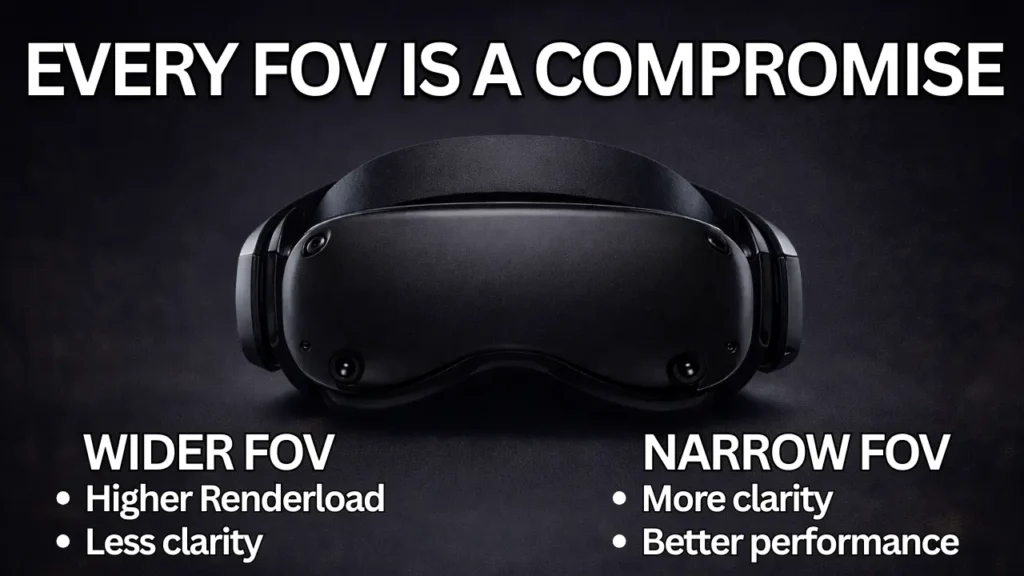
Manufacturers like to advertise the largest possible fields of view. At first glance, that sounds logical: A larger field of view should automatically feel more immersive. After all, we do not see the real world through a small tunnel either. A wider field of view therefore immediately sounds like “more reality.” And of course, there is some truth to that. A large field of view can strengthen the feeling of actually standing inside a virtual environment.
Still, the situation is far more complicated than many specifications suggest. In VR, a single number alone does not determine how good a headset feels.
What Field of View Actually Means
Field of View, or FOV for short, describes the visible image area inside a VR headset. Put simply, it is the area you can see without moving your eyes or head.
There are different ways of describing this field of view:
- horizontal FOV
- vertical FOV
- diagonal FOV
Horizontal FOV describes the visible width, vertical FOV describes the height, and diagonal FOV measures the diagonal distance from one upper corner to the opposite lower corner.
This distinction is especially important. Because diagonal values are always larger than horizontal values. However, some manufacturers simply provide a degree number without clearly explaining how it was measured. This quickly creates false impressions of how large the actual field of view really is.
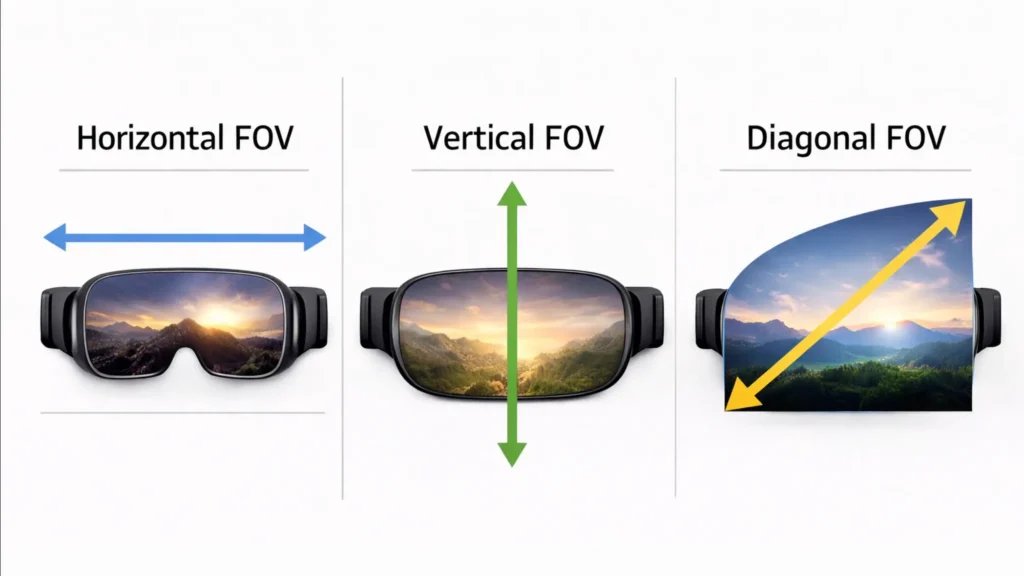
A headset with “140 degrees FOV” sounds impressive. But if that value was measured diagonally, the actually visible horizontal field of view may be significantly smaller. That does not necessarily have to be intentional deception. Still, it is misleading for users because numbers are being compared that actually describe different things.
Why Two People Can Experience the Same Headset Completely Differently
Even if a manufacturer provides accurate values, another problem still remains: The technical field of view of a headset is not automatically the field of view that every user will actually experience.
How large the visible image ultimately feels depends heavily on individual factors:
- Face shape
- Eye distance
- Eye position
- Distance between the eyes and the lenses
- Headset padding
- Fit of the head strap
Even small differences can change how much of the display is actually visible. This leads to situations where two people can wear the exact same headset and still experience a different FOV. Some people can get closer to the lenses and therefore see more of the image. Others lose visible screen area despite using the same device.
This is why VR is far more subjective than pure specifications might suggest.
Binocular Overlap: The Often Underestimated Factor
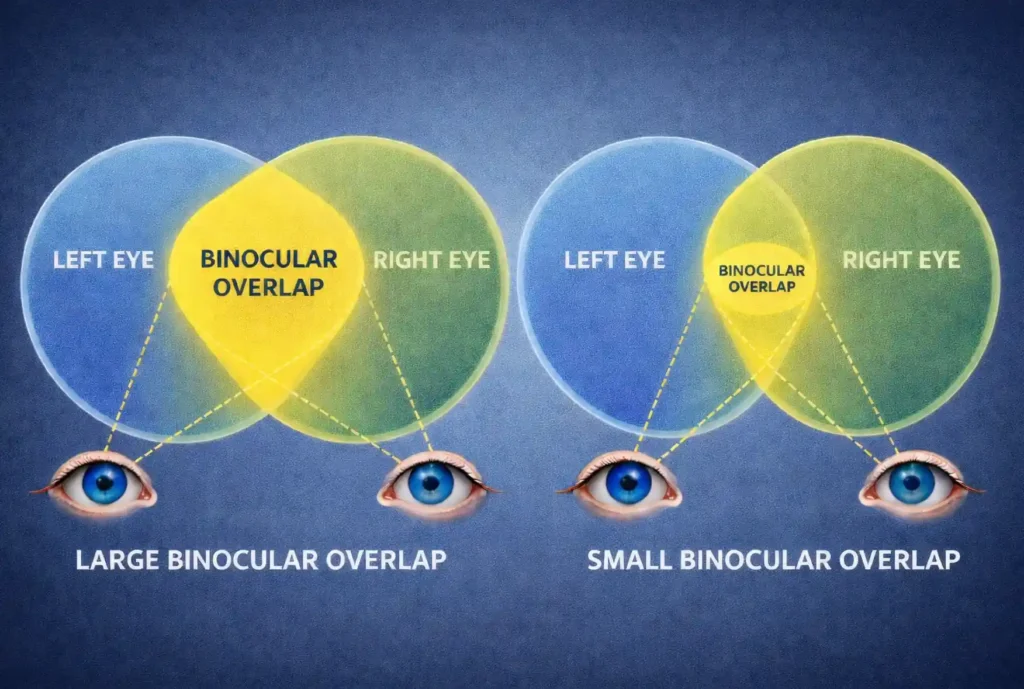
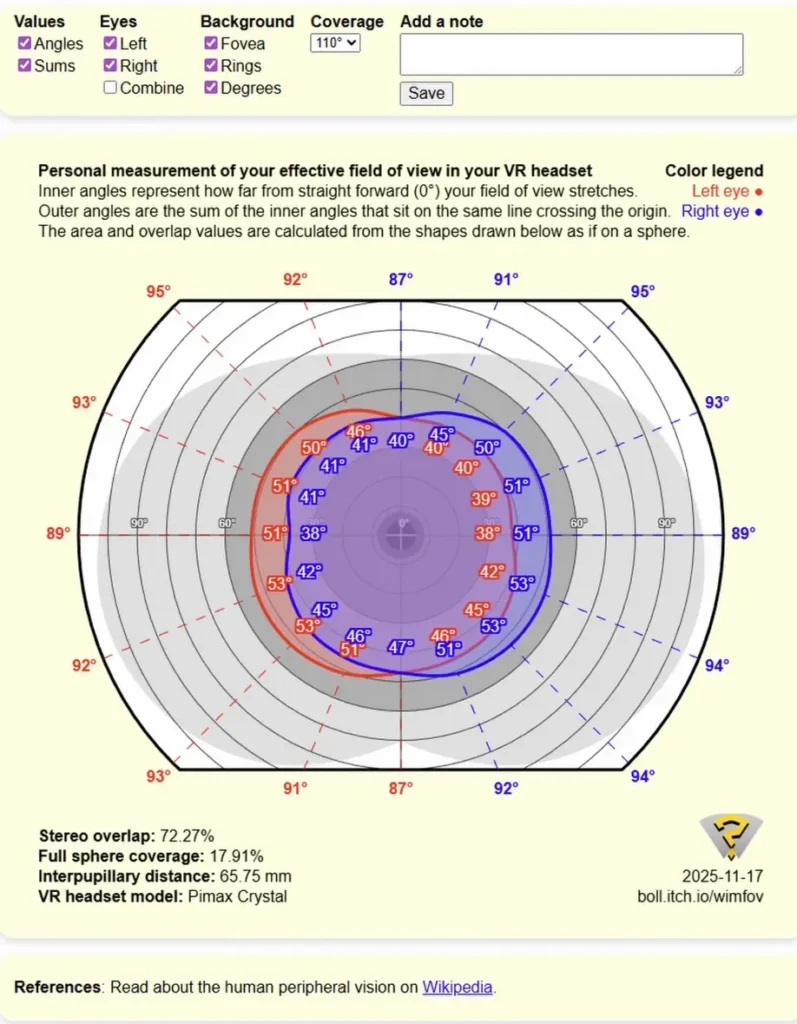
Each eye sees the environment from a slightly different perspective. The area both eyes perceive at the same time is what creates spatial vision and depth perception. This exact principle is also used in VR. The larger this overlap is, the more natural the 3D effect often feels. Many people experience headsets with high stereo overlap as more comfortable and relaxing. If the overlap becomes too small, it can have several effects:
- weaker spatial perception
- faster eye fatigue
- an unnatural viewing experience
- more compensation work for the brain
Values around 70 to 75 degrees are often considered solid. More can provide additional advantages.
The problem is this:
Large fields of view in many modern headsets often come at the expense of exactly this stereo overlap. Manufacturers expand the outer field of view but reduce the area both eyes perceive together. As a result, a headset can have an especially large FOV and still feel less comfortable for some people than a device with a smaller field of view.
How FOV Can Actually Be Measured
Interestingly, VR headsets do not simply display your actual field of view somewhere in a menu. Anyone who wants to know how large their real FOV actually is with their own face shape needs specialized tools.
TestHMD offers a comprehensive testing environment that can measure horizontal and vertical FOV, among other things. The tool costs a bit of money, but it also provides a lot of additional information related to VR optics and perception.
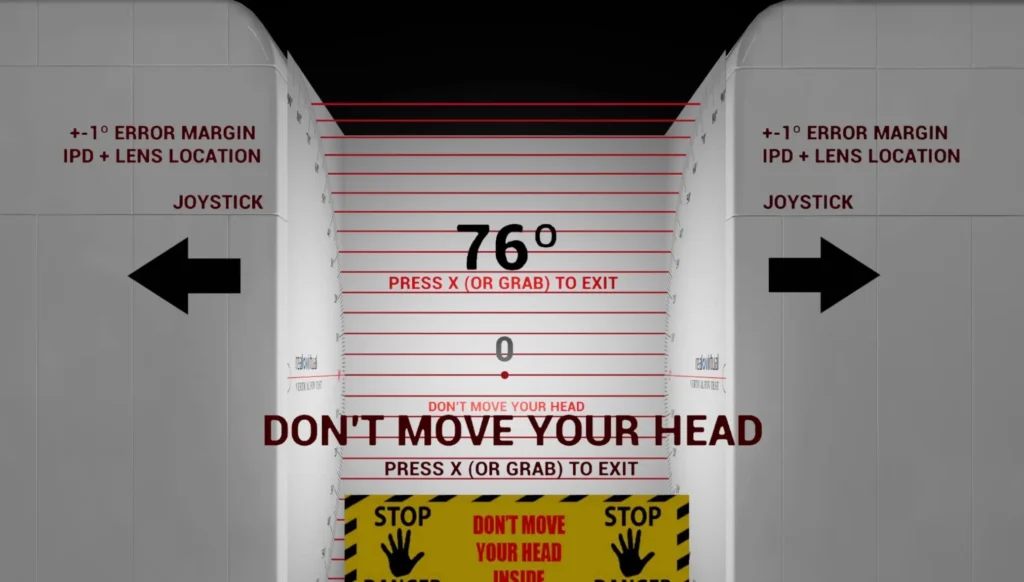
WimFOV / What Is My FOV focuses specifically on field of view measurement and is available for free. Especially useful is the detailed visualization of the individual fields of view of both eyes, including calculations for stereo overlap. This makes the tool particularly interesting for technical comparisons.
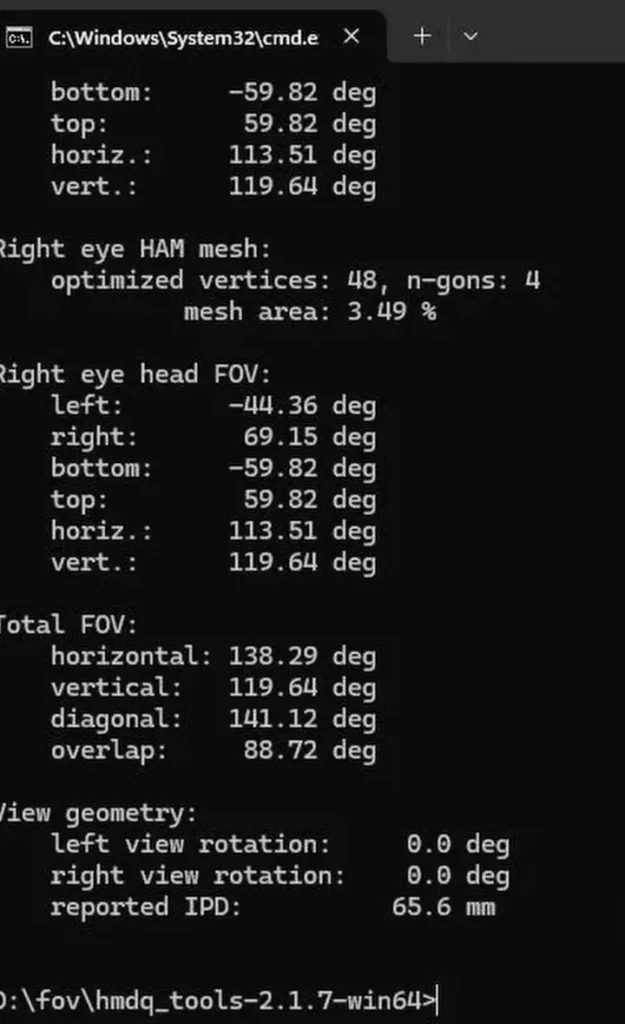
HMDQ can be used to read technical values directly from a headset’s firmware. This includes, among other things, the maximum possible theoretical field of view. Comparing that value with your own measurements quickly reveals how much of the theoretical maximum actually reaches your eyes in practice.
These programs are not necessary to enjoy VR. They mainly become interesting for people who want to better understand why certain headsets feel different from one another.
Why Immersion Does Not Only Depend on Field of View
A good VR experience is not automatically created by simply seeing as much as possible. What really matters is whether the brain trusts the image. As soon as the eyes and the brain have to start compensating, immersion begins to suffer. I just talked about the difficult interaction between all these different factors.
For example, I once used an early test device that was not yet properly calibrated on the software side. After taking the headset off, my eyes needed several minutes to settle down again. For a short moment, it almost felt like I was cross-eyed. That was an extreme case, but it illustrates very well how strongly the brain tries to compensate for conflicting visual information.
In many discussions about VR hardware, I think this factor is underestimated. Not every technical maximization automatically leads to a better experience.
Different People Have Different Priorities
Some users want the largest possible field of view. Others care more about image stability or a consistently sharp image across large areas of the display. Many refer to this as so-called edge-to-edge clarity. Others again prioritize performance and smooth gameplay over maximum resolution or maximum field of view size.
All of these priorities are valid. VR is an extremely subjective experience. There is no universally perfect headset that is automatically the best choice for everyone. Perception, comfort, and expectations simply differ too much from person to person.

Why FOV Alone Says Very Little
Field of View is not a single number that can simply be compared objectively. The actual VR experience is created through the interaction of:
- optics
- face shape
- perception
- stereo overlap
- personal comfort perception
- individual priorities
Two people can wear the same headset, measure similar values, and still come away with completely different impressions. That is why immersion is not just about seeing more, but about whether what you see feels natural and coherent to your own brain.